Camac Blog
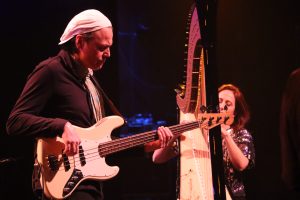
“Music that appeals to the imagination, to dreams”: Maxima Poesia live at the Espace Camac!
April 18, 2024
On 26 April, we are delighted to welcome this one-of-a-kind ensemble for a concert to the Espace Camac. MAXIMA POESIA are a group whose raison d’être is to accentuate the living relationship between poetic writing and modern jazz. Using texts from a variety of different styles and highly distinctive authors (amongst them Arthur Cravan, Joyce Mansour, Jacques Vaché Peter Handke and Boris Vian ), Maxima Poesia seek to: “give the poem back its orality, its voice, its breath, proposing a contemporary Jazz where it can breathe”, in a musical language that combines elements of the Chanson tradition, spoken word and slam.Read more…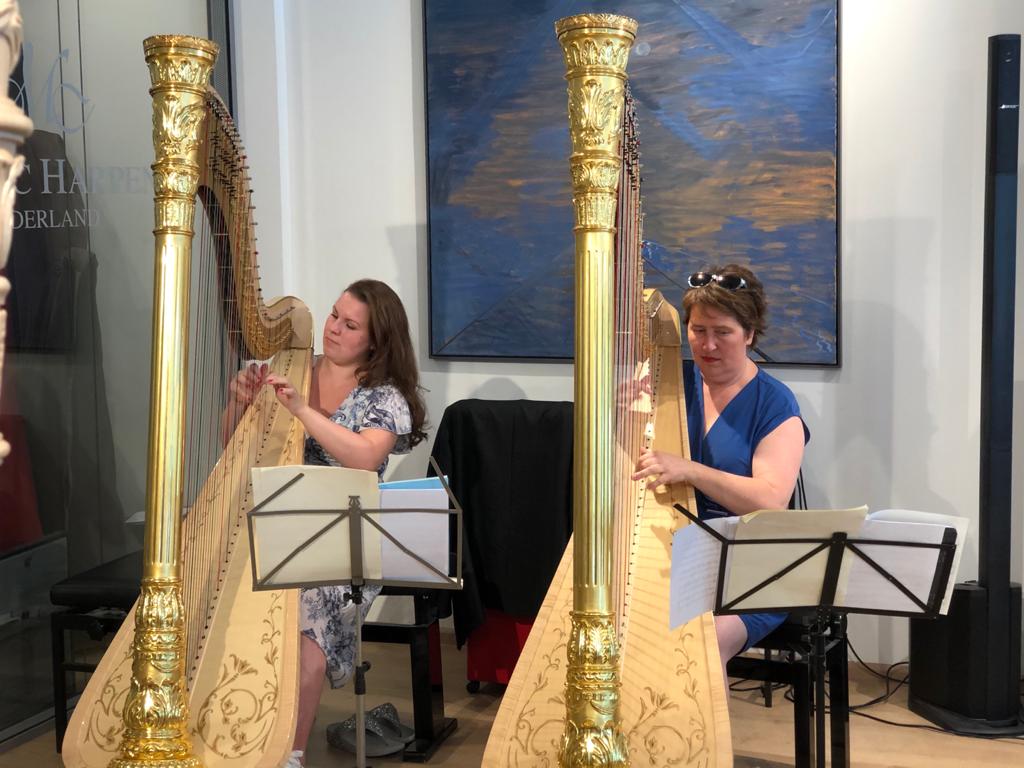
Two are better than one! An interview with Petra van der Heide and Anneleen Schuitemaker of the Concertgebouw Orchestra, Amsterdam.
April 15, 2024
The Concertgebouw orchestra is unusual in that it supports two full-time positions for harpists: Petra van der Heide, who has been principal harp since 2003 (having formerly been principal harpist of the Opera in Darmstadt) and Anneleen Schuitemaker was appointed Second harp/ Assistant principal harp in 2020 (having been academist in several major german orchestras) Read more…

Deborah Henson Conant: 5-day Baroque Flamenco Harp challenge!
April 5, 2024
If you’re looking for such a framework to energise your playing and gain confidence, join our great friend Deborah Henson-Conant for the free 5-Day BAROQUE FLAMENCO Challenge, (April 8-14, 2024) Read more…

The Edinburgh International Harp Festival 2024
March 25, 2024
The fabulous Edinburgh International Harp Festival (now in its 43rd year) returns to George Watson’s College from April 5th to April 9th, 2024. As always, prospective festival goers can look forward to an absolutely packed few days of concerts from internationally renowned performers, as well as emerging artists, groups and ensembles. The festival has always emphasised education; this they have always done with a welcoming and inclusive approach, and there will be the usual wide range of courses and workshops. Read more…